Content & authority architecture
How to structure pages and off-site signals so AI trusts and retrieves them: the cluster models, the page anatomy, and the trust signals that correlate with citations.
YouTube is the 4th most-cited domain in AI answers and overtook Reddit as the top social source. Since models read the transcript, not the pixels, here's how to make your video the one AI quotes.
Buyers ask AI what things cost. If your price is trapped in an image, a widget, or a 'contact us', the model quotes a competitor or invents a number. How to write the page it lifts instead.
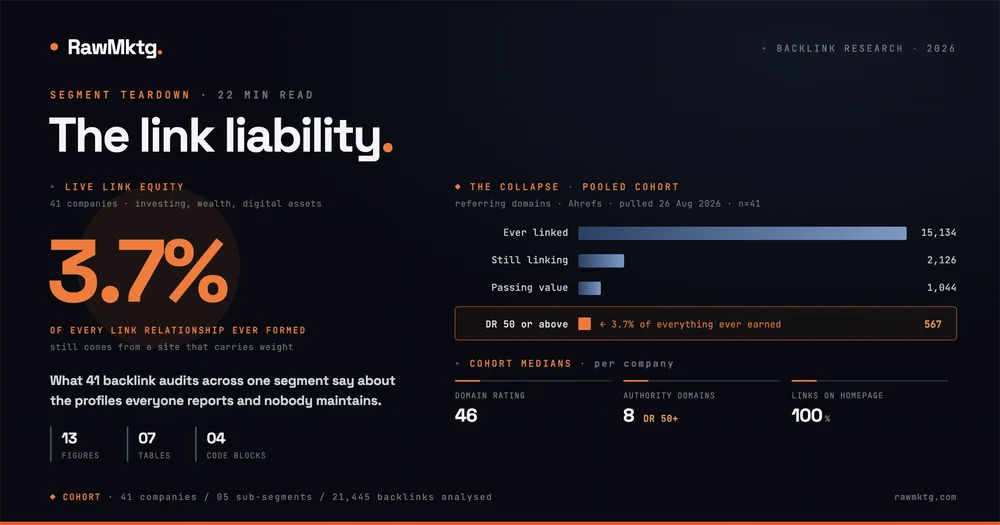
The Investing & Wealth cohort: 41 backlink audits across investing, wealth and digital assets, read as one dataset. Only 3.7% of every link relationship ever formed still carries authority.
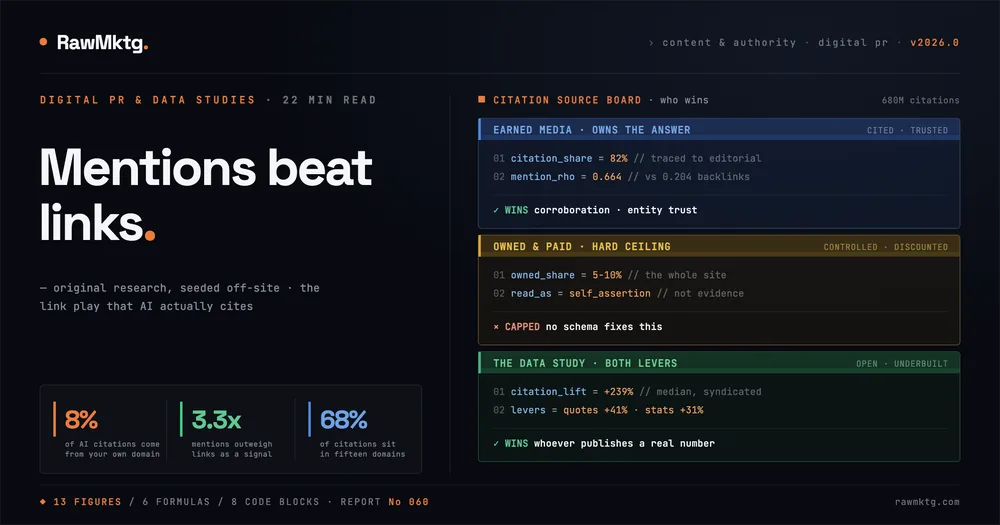
Your domain is under 10% of AI citation sources. Original research seeded off-site is what generative engines actually cite, plus the study spec and a 90-day play.
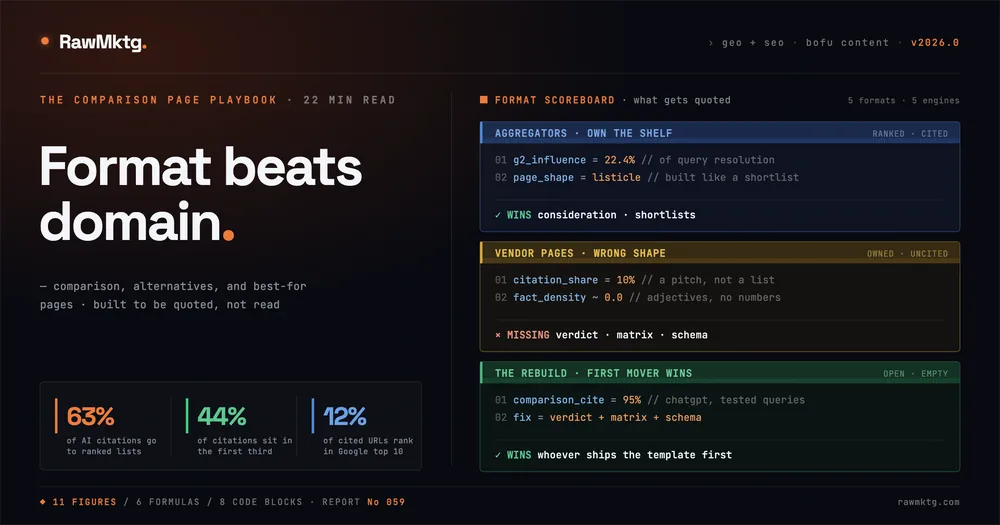
63% of AI citations go to ranked lists; only 12% of cited URLs sit in Google's top 10. The comparison-page playbook: verdict box, fact density, schema, and a 90-day sequence.
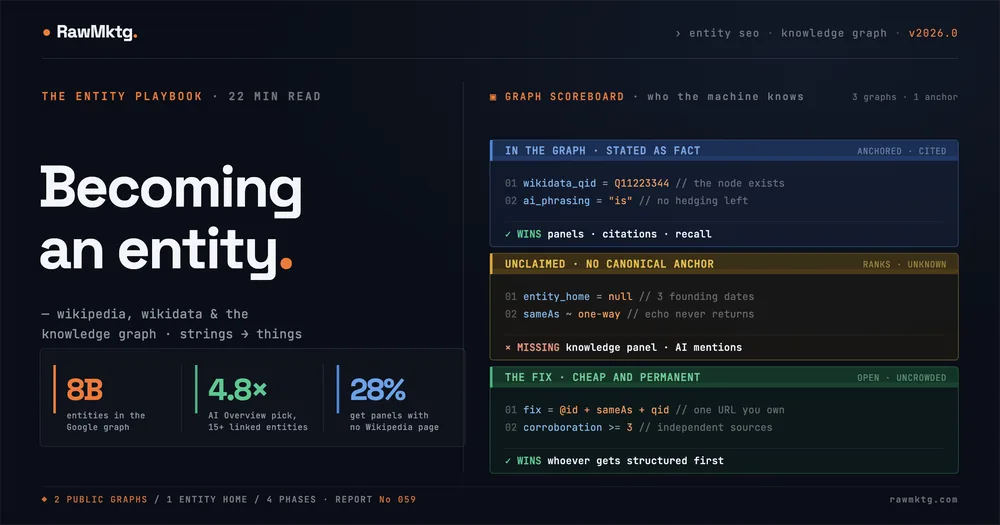
Search moved from strings to things. The build guide for becoming a recognized entity: the Entity Home, Wikidata, sameAs corroboration, and a 12-month sequence.
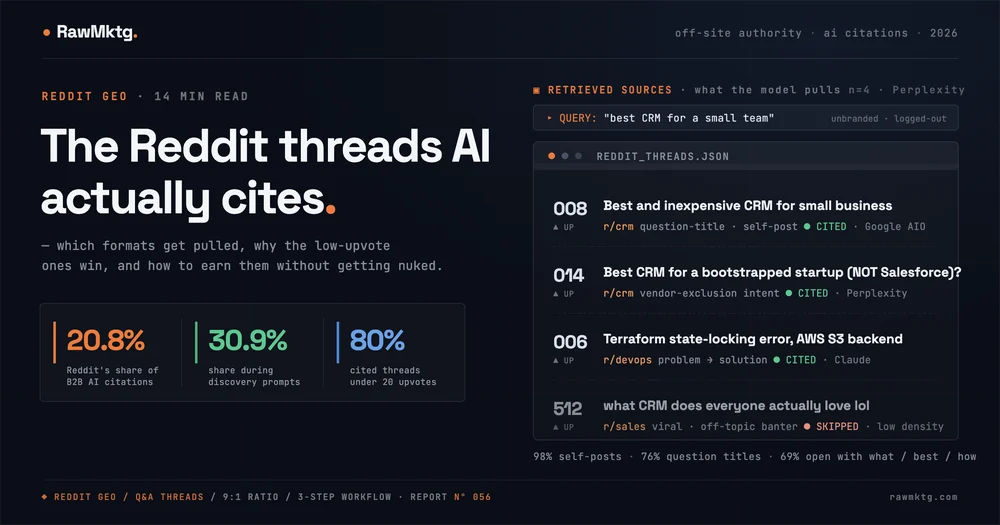
Reddit drives 20.8% of B2B AI citations. Which threads AI cites (80% have under 20 upvotes), how each engine reads Reddit, and the 9:1 workflow to earn citations without getting banned.
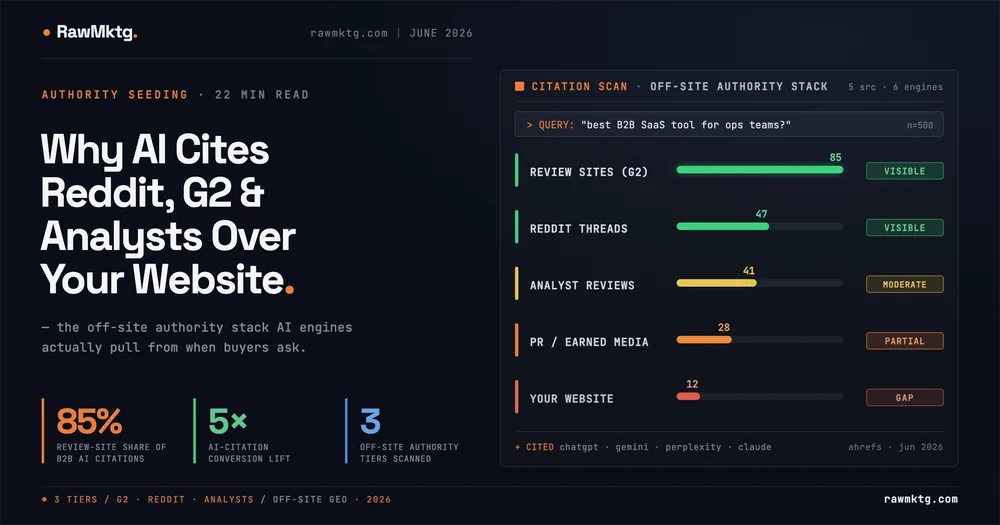
The off-site authority stack AI engines actually pull from, and how to seed G2, Reddit and analyst reviews so they feed AI answers.
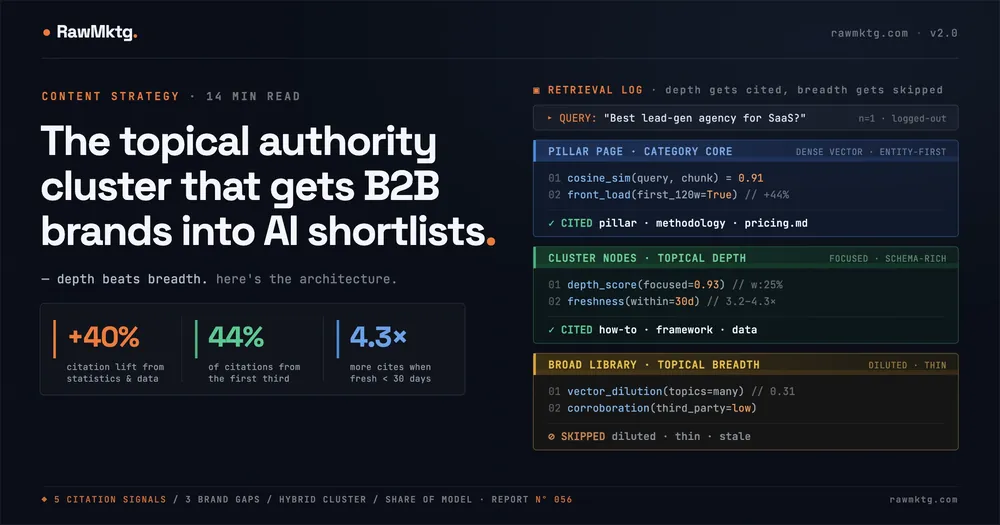
+41% citation lift from statistics, 86% of citations from brand-managed sources. The hybrid cluster architecture and Share of Model measurement framework.
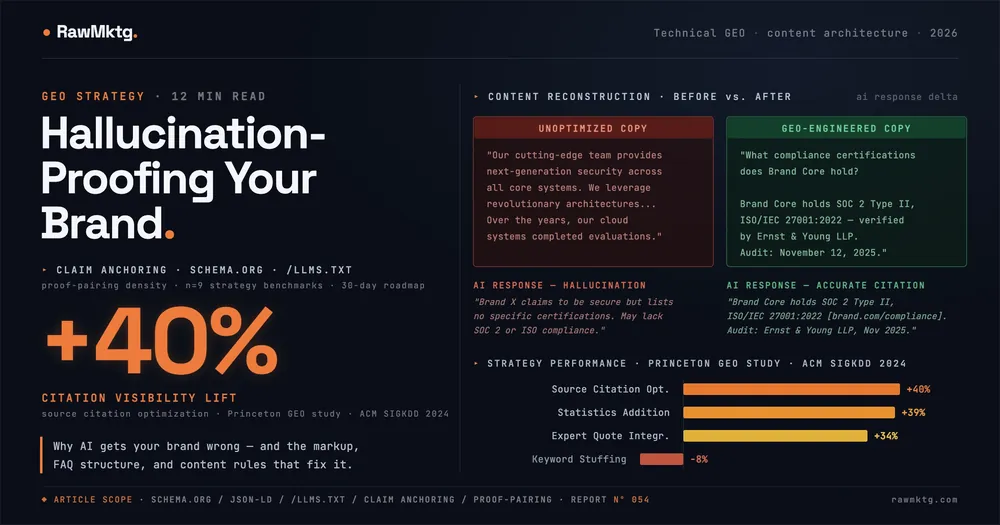
+41% citation lift from statistics; 54% fewer hallucinations with knowledge graphs. Schema @graph, /llms.txt, Answer Capsules, and Proof-Pairing Density.
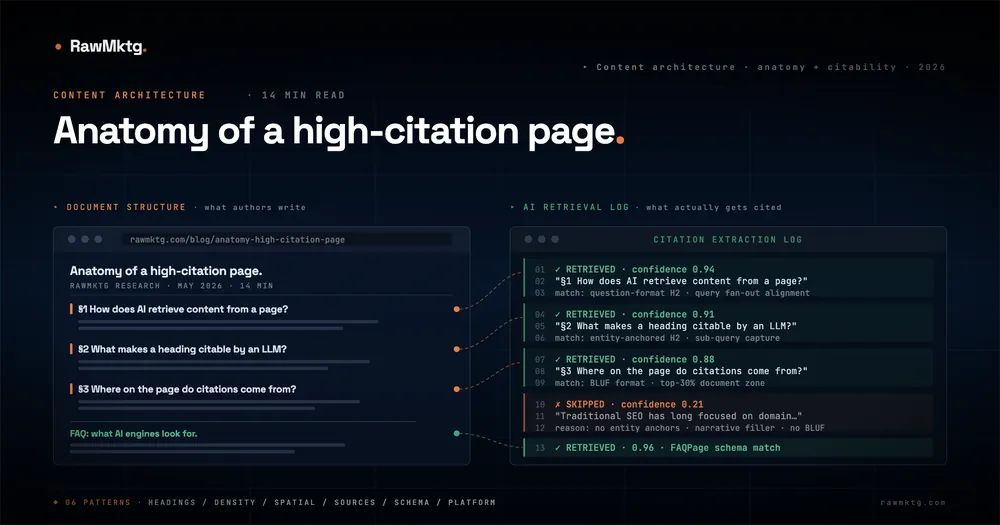
38% top-10 overlap; 55% of citations come from the first 30% of the page. What heading structure, paragraph density, and answer-lead formatting look like on cited pages.
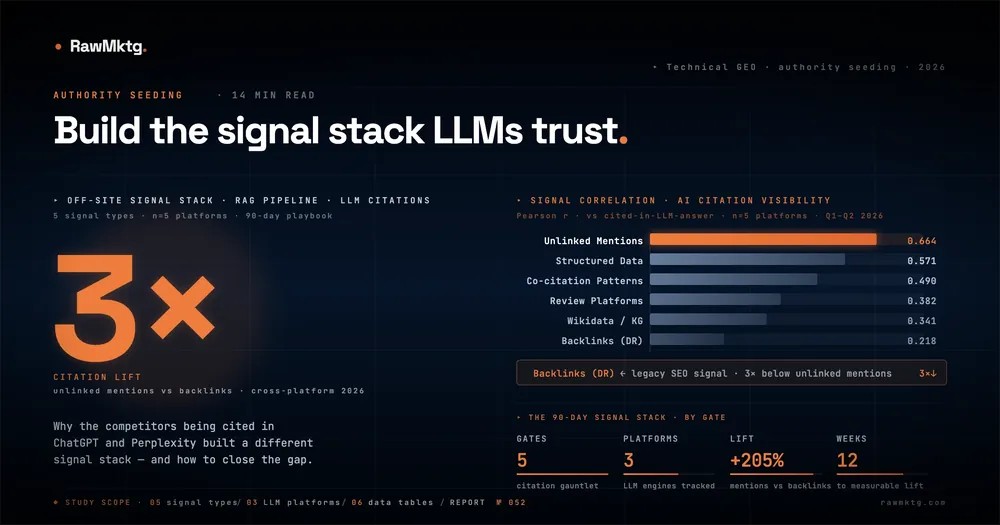
Unlinked mentions correlate at r=0.664 vs r=0.218 for backlinks. The five-gate citation gauntlet, platform profiles, and a five-phase execution blueprint.