How AI search actually works
Before the tactics, the mechanism. How retrieval-augmented generation decides what gets pulled into an answer, why each engine recommends different vendors, and how visibility compounds once you have it.
An AI agent shopping for your customer never sees your storefront, it reads a feed and a few fields, then decides whether to surface, compare or buy your product. How to be in the set it chooses from.
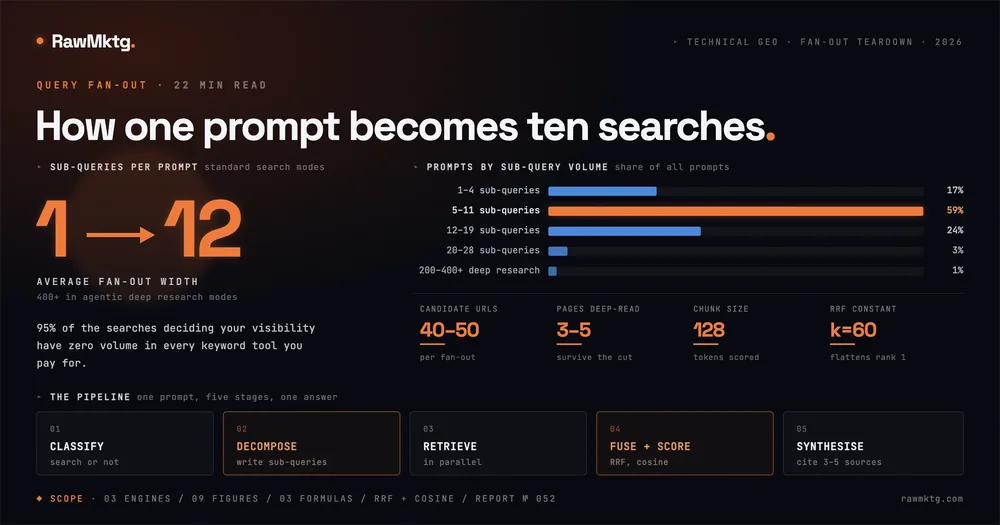
How AI search turns one prompt into 8-16 hidden sub-queries, the RRF and cosine math that decides citations, and why 95% of the searches that matter have zero keyword volume.
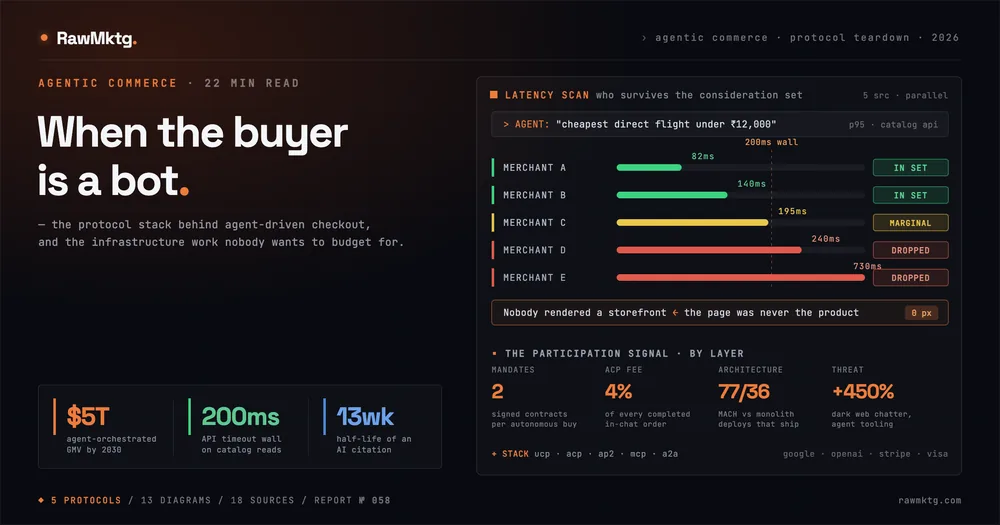
When the buyer is an AI agent, your catalog API is the product, not your homepage. The agentic-commerce protocol stack (UCP, ACP, AP2, MCP, A2A) and the infrastructure to win.
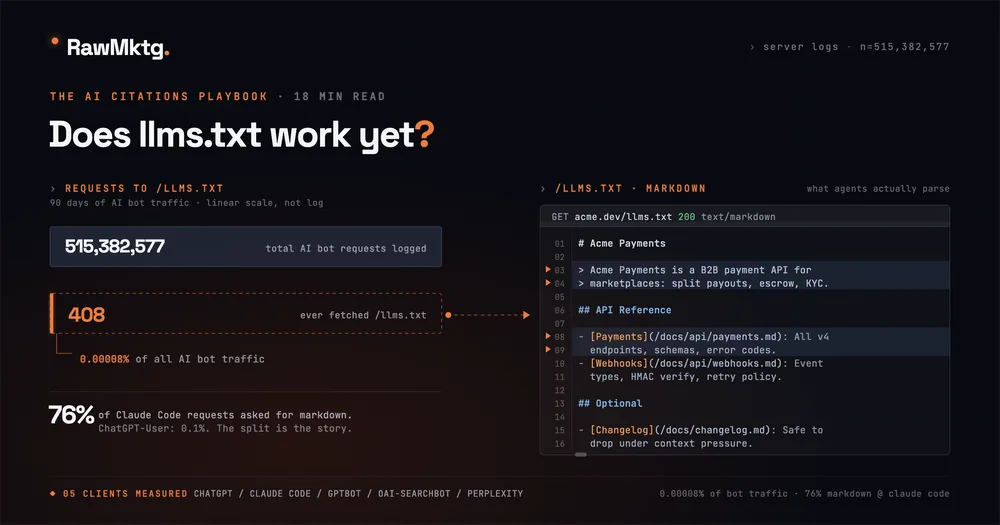
Half a billion bot requests say no; Claude Code's 76% Markdown share says yes. The server-log truth about llms.txt, and the implementation playbook.
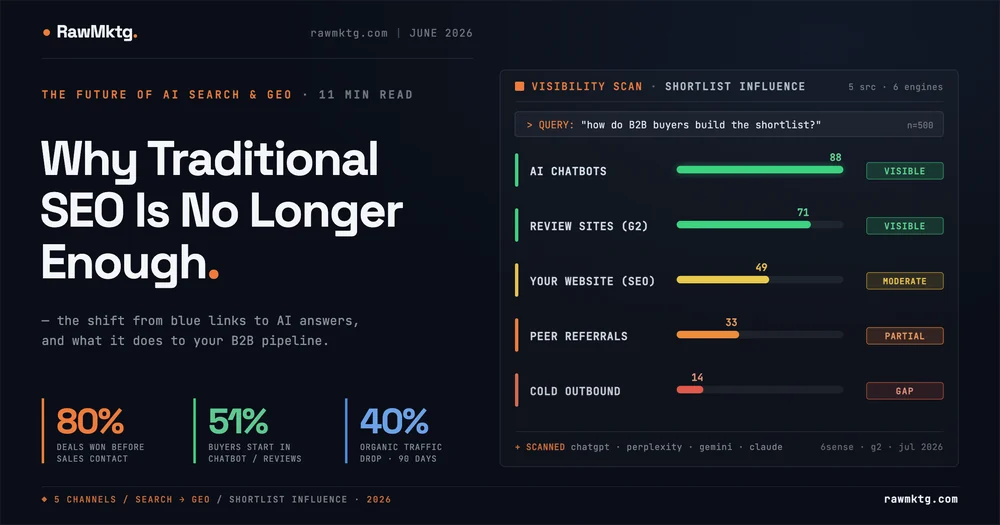
80% of B2B deals go to the vendor favored before sales contact, and chatbots now shape the shortlist. The shift from blue links to AI answers, what RAG rewards, and a 90-day GEO roadmap.
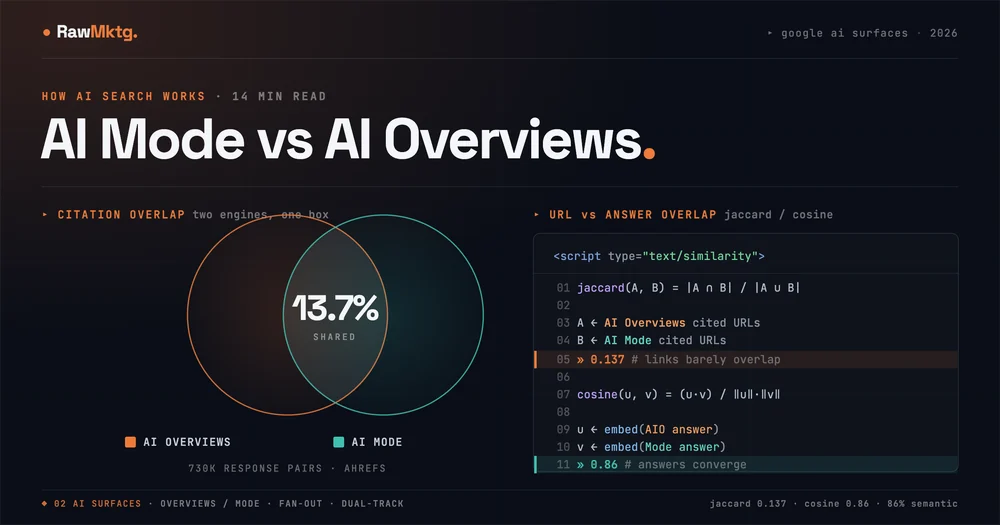
Google split search into two AI surfaces that share a query box but agree on sources just 13.7% of the time. The architecture, query fan-out, and the dual-track playbook.
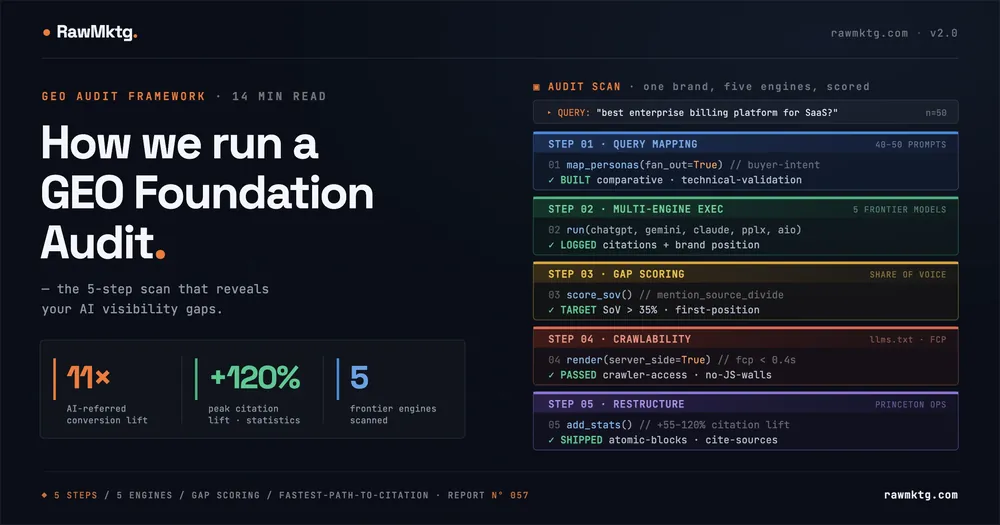
AI converts at 11x organic, but your analytics can't see it. The five-step diagnostic: query mapping, multi-model execution, citation gap scoring, crawlability, and content restructuring.
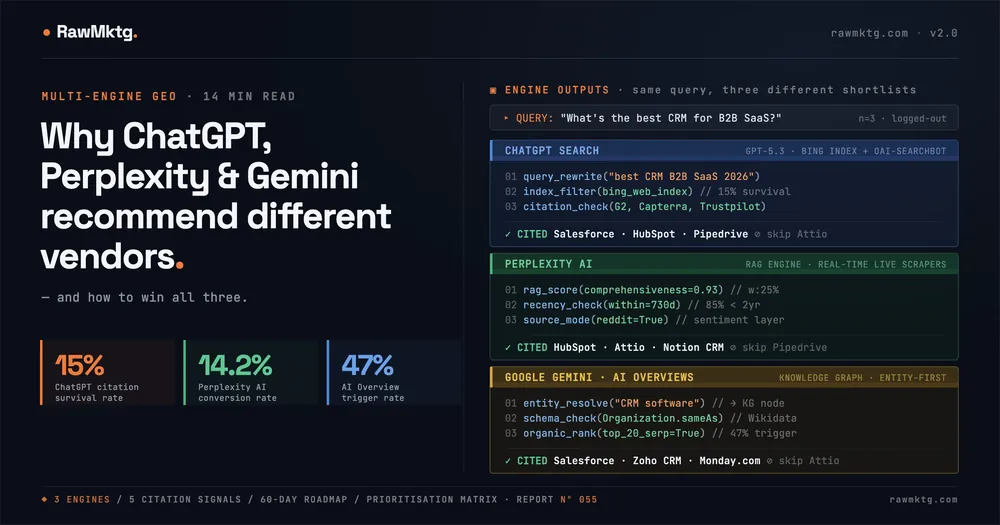
69% of B2B buyers use 3 or more AI engines. ChatGPT leans on Bing's top 15%, Perplexity scores 5 real-time RAG factors, Gemini resolves entities first. Tactics and a 60-day roadmap.
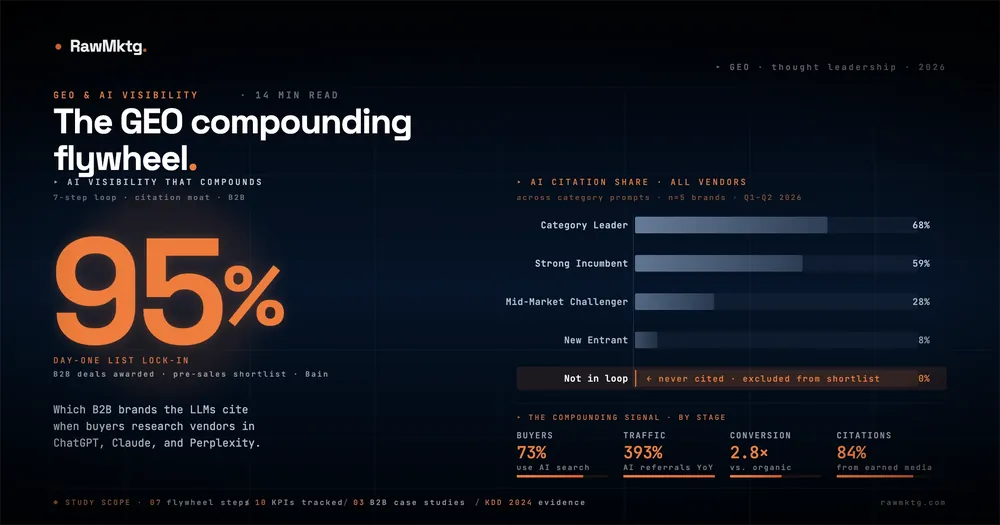
73% of B2B procurement managers use AI for vendor discovery. The seven-step loop that decides who gets cited, and why first-mover advantage compounds in AI search.
The five-stage AI search pipeline, what the Princeton and Georgia Tech GEO research actually shows, and a three-phase action plan for B2B marketers.